Description
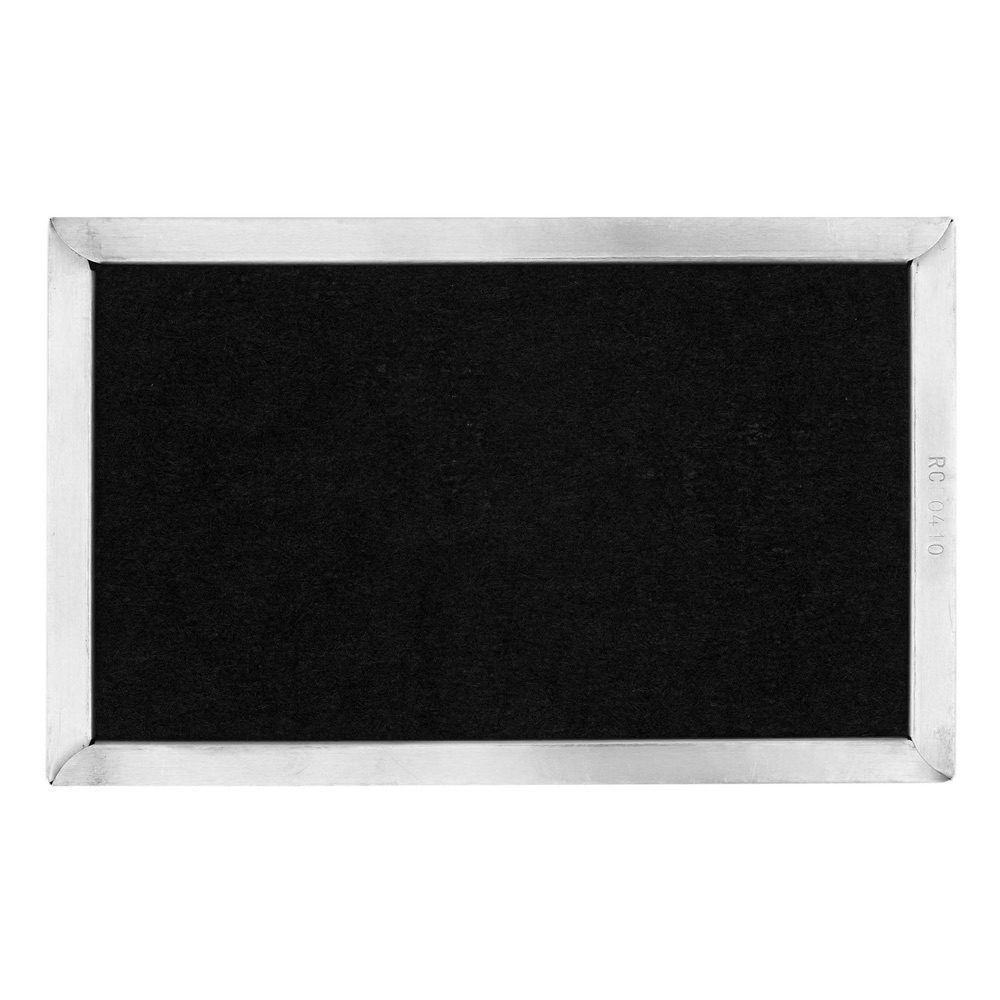
RCP0410-1-WB02X10776 replacement range hood grease filter Overview
Compatible with GE Part #WB02X10776
The RCP0410-1-WB02X10776 is a direct aftermarket replacement compatible with the GE WB02X10776 rectangular activated carbon odor filter for compatible range hoods. The range hood grease filter in your range hood is the first line of defense: it traps airborne grease particles, cooking aerosols, and range hood grease before they coat interior surfaces or reach the blower motor. This activated carbon odor filter is the second stage: it adsorbs cooking odors, smoke compounds, and volatile organic compounds before the filtered air is returned to the kitchen. The carbon media has a finite adsorption capacity and must be replaced — not washed — typically every three to six months under normal cooking conditions, or sooner when odors persist after the hood runs.
This American Metal Filter Company filter is manufactured to meet or exceed the original OEM specifications for dimensions and carbon media — a direct drop-in range hood filter replacement for part WB02X10776. It replaces WB02X33061, AP6890312, JX81C, PM02X10776, WB2X10776, so order RCP0410-1-WB02X10776 regardless of which number appears on your old filter or in your owner’s manual.
Compatible with 41 range hood models.
Range Hood Filters Inc. is an independent manufacturer of aftermarket filters. GE® and the GE logo are registered trademarks of GE LLC. All OEM part numbers and brand names referenced on this page are used strictly for compatibility identification purposes and do not imply any affiliation with or endorsement by the trademark holder.
Key Benefits of the RCP0410-1-WB02X10776 Carbon Odor Filter
- Meets or Exceeds OEM Specifications: Manufactured to match the original equipment dimensions and carbon media for a direct drop-in fit in your range hood filter bay.
- Adsorbs Cooking Odors and VOCs: Activated carbon captures cooking odors, smoke compounds, and volatile organic compounds that aluminum mesh grease cannot remove, keeping recirculated air fresh.
- Disposable Carbon Media — Replace, Do Not Wash: Replace every 3–6 months under normal cooking conditions, or sooner when cooking odors persist after the hood runs.
- direct drop-in range hood filter replacement: WB02X33061, AP6890312, JX81C, PM02X10776, WB2X10776. Order the RCP0410-1-WB02X10776 for a guaranteed fit in all compatible models.
- Fits 41 Range Hood Models: See the compatible models table below to confirm your model before ordering.
- Expertise: Range Hood Filters Inc. is the manufacturer — we design and build the filters we sell.
- Experience: We have been building and supplying range hood and microwave filters since 1986 — more than 40 years of filter manufacturing.
- Authoritativeness: As the manufacturer, Range Hood Filters Inc. supplies the United States with millions of replacement air filters, all made in the U.S.A.
- Trustworthiness: For more than 40 years we have honored and supported our customers with guaranteed satisfaction on every order.
RCP0410-1-WB02X10776 Filter Specifications — Compatible with GE Part #WB02X10776
| Specification | Detail |
|---|---|
| OEM Part Number | WB02X10776 |
| Manufacturer | American Metal Filter Company |
| Fits Brand | See compatibility table below |
| Part Type | Aftermarket Replacement Activated Carbon Odor Filter — Meets or Exceeds OEM Specifications |
| Filter Shape | Rectangular |
| Filter Technology | Activated Carbon (odor adsorption) |
| Pack Quantity | 1 |
| Application | Range hood odor and VOC adsorption — recirculating (ductless) hoods |
| Replaces Part Numbers | WB02X33061, AP6890312, JX81C, PM02X10776, WB2X10776 |
| OEM Internal Reference | None |
| Compatible Model Count | 41 models (see table below) |
| OEM / Aftermarket | Aftermarket — meets or exceeds OEM specifications |
RCP0410-1-WB02X10776 Compatible Part Numbers & Cross References
The RCP0410-1-WB02X10776 is compatible with GE OEM part number WB02X10776. If any of the following numbers appear on your existing filter or in a parts lookup system, the RCP0410-1-WB02X10776 is the correct compatible replacement:
| Part Number | Status / Notes |
|---|---|
| WB02X10776 | OEM Part Number — this range hood grease filter is the compatible replacement |
| WB02X33061 | Prior part number — current replacement is WB02X10776 |
| AP6890312 | Prior part number — current replacement is WB02X10776 |
| JX81C | Prior part number — current replacement is WB02X10776 |
| PM02X10776 | Prior part number — current replacement is WB02X10776 |
| WB2X10776 | Prior part number — current replacement is WB02X10776 |
Compatible Range Hood Models
The RCP0410-1-WB02X10776 is compatible with the following 41 range hood models. Locate your range hood model number on the label inside the hood canopy before ordering.
| Brand | Model Number |
|---|---|
| General Electric | JNM1541DM1CC |
| General Electric | JNM1541DM1WW |
| General Electric | JNM3163DJ1BB |
| General Electric | JNM3163DJ1WW |
| General Electric | JNM3163DJ2BB |
| General Electric | JNM3163DJ2WW |
| General Electric | JNM3163DJ3BB |
| General Electric | JNM3163DJ3WW |
| General Electric | JNM3163RJ1SS |
| General Electric | JNM3163RJ2SS |
| General Electric | JNM3163RJ3SS |
| General Electric | JNM3163RJ4SS |
| General Electric | JNM3163RJ5SS |
| General Electric | JVM1533BD001 () |
| General Electric | JVM1533BD002 () |
| General Electric | JVM1533BD003 () |
| General Electric | JVM1533BD004 () |
| General Electric | JVM1533BD05 |
| General Electric | JVM1533WD001 () |
| General Electric | JVM1533WD002 () |
| General Electric | JVM1533WD003 () |
| General Electric | JVM1533WD004 () |
| General Electric | JVM1533WD05 |
| General Electric | JVM1542BF001 () |
| General Electric | JVM1542BF002 () |
| General Electric | JVM1542BF03 |
| General Electric | JVM1542WF001 () |
| General Electric | JVM1542WF002 () |
| General Electric | JVM1542WF03 |
| General Electric | JVM3150SF1SS |
| General Electric | JVM3162DJ1BB |
| General Electric | JVM3162DJ1WW |
| General Electric | JVM3162DJ2BB |
| General Electric | JVM3162DJ2WW |
| General Electric | JVM3162DJ3BB |
| General Electric | JVM3162DJ3WW |
| General Electric | JVM3162RJ1SS |
| General Electric | JVM3162RJ2SS |
| General Electric | JVM3162RJ3SS |
| General Electric | JVM3162RJ4SS |
| General Electric | JVM3162RJ5SS |
How Activated Carbon Odor Filters Work
Activated carbon (activated charcoal) is processed to have an extremely large internal surface area through a network of microscopic pores — a single gram can provide hundreds of square meters of surface area. This physical structure allows the carbon to adsorb a wide variety of organic molecules, including cooking odors, smoke compounds, and volatile organic compounds (VOCs) that pass through and beyond the aluminum mesh grease filter stage.
As the range hood draws air through the carbon filter, odor and smoke molecules contact the carbon surface and are retained there by adsorption. Over time, the available binding sites on the carbon surface become occupied and the range hood grease filter progressively loses effectiveness. Because the carbon is chemically bound to the adsorbed compounds, washing the range hood grease filter in water does not regenerate the carbon — it wets and damages the media. the range hood grease filter must be replaced when effectiveness declines.
Range Hood Odor Filter Replacement Schedule
Replace the RCP0410-1-WB02X10776 every three to six months under normal residential cooking conditions. Replace sooner if cooking odors are noticeable in the kitchen while the range hood runs at full speed — this is the most reliable indicator that the carbon is saturated. Do not attempt to wash or regenerate this range hood grease filter.
Range Hood Carbon Odor Filter Installation
- Turn off the range hood before accessing the range hood grease filter bay.
- Remove the old carbon filter: Slide or unclip the existing odor filter from its track or mounting hooks.
- Insert the RCP0410-1-WB02X10776: Slide the new filter into the same track or clip it onto the mounting hooks. Confirm it lies flat and is fully seated.
- Restore operation: the range hood grease filter is ready for immediate use. Replace every 3–6 months when odor filtration declines.
RCP0410-1-WB02X10776 Filter FAQ — Compatible with GE Part #WB02X10776
Which range hood models are compatible with the GE WB02X10776 odor filter?
The RCP0410-1-WB02X10776 is compatible with 41 range hood models. See the compatible models table on this page.
What part numbers does the WB02X10776 replace?
The RCP0410-1-WB02X10776 replaces WB02X33061, AP6890312, JX81C, PM02X10776, WB2X10776. Order the RCP0410-1-WB02X10776 regardless of which older number appears on your filter.
How does an activated carbon odor filter work?
Activated carbon has a very large internal surface area through microscopic pores. As air passes through the filter, odor molecules, smoke compounds, and volatile organic compounds adsorb — chemically bind — to the carbon surface and are removed from the airstream. Over time the binding sites become saturated and the filter must be replaced.
How often should I replace the carbon odor filter?
Replace every three to six months under normal residential cooking conditions. Replace sooner if cooking odors are noticeable in the kitchen while the range hood runs at full speed — that is the most reliable indicator that the carbon is saturated. Do not wash this filter; washing destroys the carbon media.
Is this a genuine GE part or an aftermarket replacement?
Yes, this is an aftermarket replacement range hood grease filter manufactured by American Metal Filter Company, not a genuine GE OEM part. It is manufactured to meet or exceed the original OEM specifications for dimensions and carbon media, making it a direct drop-in range hood filter replacement compatible with GE part number WB02X10776.
About GE® Appliances: A Century of American Kitchen Innovation
General Electric Company was incorporated in 1892 through the merger of Edison General Electric Company — founded by Thomas Edison in 1890 — and Thomson-Houston Electric Company. The consolidated company brought together Edison’s direct-current light bulb and power distribution patents with Thomson-Houston’s alternating-current technology, establishing a foundation that would make GE one of the defining industrial corporations of the twentieth century. General Electric was among the original twelve companies listed on the Dow Jones Industrial Average when the index launched in 1896.
GE entered the home appliance market in earnest in the 1910s and 1920s, manufacturing electric fans, ranges, and — most notably — the iconic Monitor Top refrigerator, introduced in 1927. The Monitor Top became one of the best-selling refrigerators of its era and established GE as a trusted household name in kitchen appliances. To support the growing appliance division, GE constructed Appliance Park in Louisville, Kentucky, a manufacturing campus of more than 1,000 acres that opened in 1953. Appliance Park became the center of GE home appliance production for the next six decades and remained the home of what would become GE Appliances long after the ownership of the division changed hands.
GE Appliances has been a significant manufacturer of residential cooking ventilation products for decades. In 1978, GE introduced the Spacemaker line of over-the-range microwave ovens, combining microwave cooking with powered kitchen ventilation in a single unit mounted above the range — a format that went on to become the dominant approach to kitchen exhaust ventilation in American homes. GE range hoods and Spacemaker over-the-range microwaves rely on aluminum mesh grease filters to capture aerosolized cooking grease from the air drawn through the unit. These filters are identified by GE-assigned part numbers such as WB02X11126, WB02X32269, and WB06X10718, among many others spanning decades of production at Appliance Park.
In June 2016, General Electric Company completed the sale of its appliance division to Qingdao Haier Co., Ltd. (now Haier Smart Home) for approximately $5.4 billion. The transaction transferred ownership of the GE, GE Profile, GE Café, Monogram, and Hotpoint appliance brand names, along with Appliance Park and manufacturing operations across North America. The appliance business now operates as GE Appliances, a Haier company, headquartered at Appliance Park in Louisville, Kentucky. General Electric Company retains ownership of the GE® trademark and licenses it to GE Appliances under a long-term agreement.
GE® and General Electric® are registered trademarks of General Electric Company, used by GE Appliances, a Haier company, under license. Range Hood Filters Inc. is not affiliated with, endorsed by, or sponsored by GE Appliances, General Electric Company, or Haier Smart Home. References to the GE® brand and part numbers are used solely for product compatibility identification purposes.
More Ge® Range Hood Filter Replacements
Browse the full Ge replacement filter collection, or see closest in size below:
The History of the Residential Range Hood
Before Electricity: Hearths, Flues, and Chimney Canopies
The fundamental problem of removing cooking smoke from an enclosed space is as old as indoor cooking itself. Ancient Roman kitchens were constructed with hearths positioned beneath vented roof openings, allowing convective airflow to carry smoke upward and out. Medieval great halls used central hearths under high-vaulted ceilings designed to disperse and dilute smoke before it reached eye level. The refinement of the chimney fireplace in Europe during the 12th and 13th centuries formalized the concept of a capture zone above the cooking source connected by a flue to the exterior — the direct architectural ancestor of the modern range hood.
By the early 19th century, institutional kitchens in large hospitals, military facilities, and hotels were being designed with purpose-built sheet metal canopy flues suspended above cooking ranges. These were passive systems — no fan, relying entirely on the buoyancy of hot air and the draft of the chimney. They were effective at removing heat and some combustion gases, but provided limited capture of grease vapor and smoke at the cooking surface. For these early systems there was no filter, no blower, and no standardized product — each was custom-fabricated by tradespeople as part of the building’s kitchen construction.
Electrification and the Commercial Kitchen Exhaust Hood (Early 1900s)
The electrification of American cities in the 1880s and 1890s made electrically powered exhaust fans practical for large-scale installation. By the 1910s and 1920s, major American hotels, restaurants, hospitals, and institutional food service operations were routinely specifying powered sheet metal exhaust hoods above their commercial ranges. These were custom-fabricated structures: a formed sheet metal canopy sized to span the cooking equipment, connected by ductwork to an exhaust fan that discharged to the building exterior. There was still no standardized filter medium — grease accumulated on the interior hood surfaces and ductwork, which required periodic manual cleaning.
Municipal governments and fire safety organizations took notice. The National Fire Protection Association® (NFPA®), founded in 1896, began developing standards for commercial cooking equipment ventilation in the early 20th century — standards that would eventually be codified as NFPA 96, the Standard for Ventilation Control and Fire Protection of Commercial Cooking Operations, which remains the governing standard for commercial kitchen exhaust today. Municipal health departments in major American cities similarly began requiring mechanical exhaust ventilation in permitted commercial kitchens. Demand for the custom-fabricated commercial kitchen hood was thus established not just by occupational comfort but by code compliance — an early example of regulation driving adoption of a safety technology.
One critical manufacturing challenge became apparent almost immediately: grease accumulation in the exhaust ductwork represented a serious fire hazard. A single uncontrolled grease fire in an exhaust duct could rapidly spread to the building structure. The need for a removable, cleanable filter to capture grease at the hood — before it entered the ductwork — was recognized, and early commercial hoods began to incorporate primitive mesh or baffle-style grease collectors. These were the forerunners of the modern aluminum mesh grease filter.
The First Residential Range Hoods: 1932–1933
The range hood as a mass-market residential consumer product — something designed, manufactured, packaged, and sold to American homeowners rather than custom-fabricated for commercial kitchens by tradespeople — was born in the United States in the early 1930s.
In 1932, in the depths of the Great Depression, a manufacturer in Hartford, Wisconsin developed a compact, efficiently motorized kitchen ventilation fan designed for residential installation. Affordable and manufacturable at scale, the product was the first mass-produced powered residential kitchen ventilation device of its kind, and it launched what became a major segment of the American home appliance industry.
One year later, in 1933, a manufacturer in Dallas, Texas introduced what it described as the first purpose-built home cooking ventilation and range hood product. The first range hoods were produced in a small Dallas workshop and sold directly to homeowners. Outside investment in the late 1930s allowed the operation to grow, and by 1961 the company had moved to Richardson, Texas, where it continued to operate for decades.
Postwar Expansion and the Aluminum Mesh Grease Filter (1940s–1950s)
The end of World War II and the subsequent American housing boom transformed range hood installation from an occasional luxury into a standard feature of new home construction. Under programs including the GI Bill, millions of new single-family homes were built across the United States between 1946 and 1960. Builders, architects, and building code authorities began standardizing the residential kitchen — and powered range hood ventilation became a built-in design expectation rather than an optional upgrade.
It was during this critical postwar period that the aluminum mesh grease filter was developed and refined for residential range hoods. For the ducted hoods of that era, the aluminum mesh grease filter was the complete filtration solution, mechanically capturing grease particles before they entered the ductwork. The ductless recirculating hood, however, required a second filtration stage to address what the aluminum mesh grease cannot: cooking odors, smoke compounds, and volatile organic compounds. That second stage — the activated carbon filter — became the defining technology of the recirculating range hood when it emerged in the following decade.
In 1955, the residential ventilation products industry formed the Home Ventilating Institute (HVI), a trade association dedicated to establishing standardized testing protocols and performance certification for residential range hoods, exhaust fans, and related products. HVI developed the standardized measurement of hood airflow in CFM (cubic feet per minute), established noise level (sone) ratings, and created certification programs that allowed building codes to reference verifiable, third-party-tested performance data. HVI certification — the familiar HVI seal found on range hood packaging — became the industry standard for performance claims and remains the governing certification program for the North American residential ventilation market today.
The Ductless Hood and Activated Charcoal Filtration (1970s)
Through the 1960s, virtually every residential range hood sold in the United States was a ducted model: it required a sheet metal or flexible duct penetrating the wall or ceiling to carry exhaust air to the building exterior. This constraint limited range hood installation to locations where ductwork routing was feasible — generally exterior kitchen walls or ceilings with accessible attic or soffit space.
The rapid expansion of apartment and condominium construction in American cities during the 1960s and 1970s created a large and underserved market: kitchens in multi-unit buildings where exterior duct penetration was impractical, structurally constrained, or prohibited by building management. The ductless — or recirculating — range hood was developed for this market. Ductless hoods filter air in two stages and return it to the kitchen rather than exhausting it outdoors. The first stage is the familiar aluminum mesh grease filter; the second stage is an activated charcoal (activated carbon) filter that adsorbs cooking odors, smoke compounds, and volatile organic compounds that the aluminum mesh grease cannot capture. Activated charcoal has a finite adsorption capacity and must be periodically replaced — typically every three to six months under normal residential cooking conditions, or sooner in households that cook frequently at high heat.
The Baffle Filter and Professional-Grade Residential Hoods (1980s–2000s)
In the American residential market, baffle filters became available in premium hoods through the 1990s and found their largest audience in a new product category that transformed American kitchen design: the professional residential range. Beginning in the mid-1980s, the first ranges designed to bring the power and performance of commercial cooking equipment — high-BTU burners, heavy-gauge construction, commercial-grade controls — to the residential kitchen created strong demand for range hoods that could handle higher grease and vapor loads, accelerating adoption of baffle filter designs and larger, higher-CFM hood configurations in American homes.
The Range Hood Today
Today, the residential range hood is a standard fixture in virtually every American kitchen. The industry is served by manufacturers across the United States, Italy, China, South Korea, and beyond, with products ranging from builder-grade aluminum-housing ducted hoods to architectural statement pieces with custom stainless or glass finishes costing several thousand dollars. HVI certification remains the authoritative standard for performance verification in the North American market. NFPA standards continue to govern commercial cooking ventilation, and residential building codes in most jurisdictions reference minimum ventilation requirements for kitchen spaces.
Despite nearly a century of product development, the activated carbon odor filter — introduced alongside the ductless recirculating range hood in the 1970s — remains the standard medium for cooking odor and smoke compound capture in kitchens where exterior duct penetration is not feasible. Unlike the aluminum mesh grease filter, which is washed and reused indefinitely, the carbon filter must be replaced periodically as its adsorption capacity is exhausted — typically every three to six months under normal residential cooking conditions. Regular replacement maintains effective odor control and keeps the recirculating hood performing as intended.
Why Order from Range Hood Filters Inc.?
These are precision compatible replacement filters, not OEM originals — and that’s intentional. Range Hood Filters Inc. has been manufacturing precision replacement range hood filters for all brands for more than 40 years, building each filter to exacting specifications using precision machining techniques. Every filter is proudly made in the U.S.A. and engineered to meet or exceed the performance of the original brand part it replaces. Any range hood filter that is no longer available from the original manufacturer can be replaced with confidence using our precision compatible filters.
When you order through Range Hood Filters Inc., you get:
- 40+ years of manufacturing expertise — filters built to precision-machined specs, not rebranded imports
- Made in the U.S.A. — every filter manufactured domestically to consistent quality standards
- Hundreds of filter models in stock — one of the largest in-stock inventories of range hood replacement filters available anywhere
- Fast shipping — most orders ship the same or next business day
- Free shipping on qualified orders
- Free 30-day returns — if it’s not the right fit, return it at no cost